Why ibc Matter for Modern Storage and Logistics
ibc help businesses store and move liquids and bulk materials with less waste, better space usage, and smoother handling. This guide breaks down practical use cases, key benefits, and selection tips.
As supply chains become faster and warehouses become tighter on space, ibc have earned a clear role in day-to-day operations. Instead of relying on many small containers that increase labor and packaging waste, ibc offer a scalable approach that supports bulk handling with consistent footprint and predictable transport routines. In this article, you will learn how ibc fit into real operational workflows, what makes them efficient, and how to choose an option that matches your materials and process.
Product reference:
ibc
How ibc support workflow efficiency
ibc are designed around handling efficiency. In many operations, the real cost is not just the container itself, but the time spent moving, stacking, filling, draining, cleaning, and documenting the movement of materials. With ibc, teams can streamline these steps because the container format is standardized, easier to stage in a warehouse, and often compatible with common material-handling equipment.
Common scenarios where ibc perform well
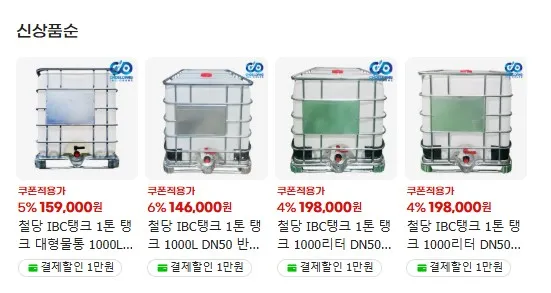
ibc are not limited to one niche. Their value shows up in different industries when bulk movement and controlled storage are required:
- Manufacturing lines: ibc can be staged near production to keep supply consistent and reduce frequent refills.
- Ingredient and additive storage: for operations that use liquids or granules repeatedly, ibc can simplify dispensing and inventory checks.
- Field and facility support: water, compatible solutions, and other inputs can be stored and distributed with less handling friction.
Key benefits to evaluate
Not every operation values the same outcome. These are the benefits most teams evaluate first when adopting ibc:
| Evaluation point | What it means in practice |
|---|---|
| Lower handling overhead | Fewer container units can mean fewer moves, fewer labels to manage, and fewer transfer steps during loading and unloading. |
| Better space utilization | Stack-friendly formats can reduce wasted air space and make staging areas easier to organize. |
| Reduced packaging waste | Reusable formats can reduce one-time packaging volume, depending on your cleaning and reuse policy. |
| Operational consistency | Standard footprints help logistics teams plan pallet positions, transport loads, and storage zones more predictably. |
What to check before choosing ibc
To avoid mismatches, confirm these points before purchase or deployment. Each item reduces the risk of leakage, inefficiency, or compliance issues in the field.
- Material compatibility: confirm the stored substance is compatible with the ibc structure and internal surfaces.
- Dispensing and access needs: consider how you will fill, drain, and measure contents, including valves and connection types.
- Cleaning and reuse policy: decide whether ibc are single-use, reused internally, or returned through a program.
- Transport and storage limits: verify stack rules, load limits, and how the ibc will be secured during movement.
In conclusion, ibc can be a practical upgrade for storage and transport workflows because they reduce the number of container units, improve space planning, and support repeatable handling routines. When ibc are selected with compatibility and process in mind, they can deliver consistent operational gains rather than creating new friction.
To get the best outcome, map your current workflow first, identify where handling time is lost, and then adopt ibc in a way that matches how your team fills, moves, and uses materials daily. That approach keeps ibc implementation simple and measurable.